Angel – the nearest tube stop to City University in Islington – features in a famous British board game, Monopoly. What else would you like to know about our corner of London?
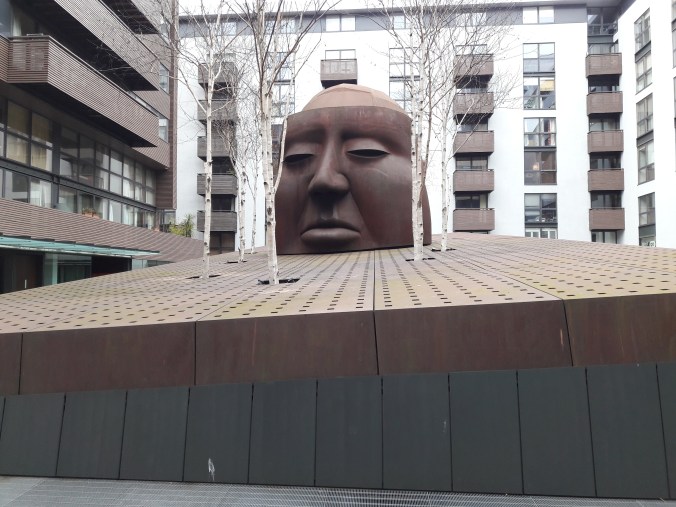
Film maker Alfred Hitchcock (the master of suspense) had a movie studio in Islington, London where he shot scenes for thriller classics such as The 39 Steps and The Lady Vanishes. His old work space, the Gainsborough Studios, is now gated housing. (c) Engage London
Islington is one of London’s 32 boroughs. It’s not on the tourist map although it is a short journey (on the number 4 bus) to the City (London’s financial district). Even so, Islington is well known across the world because so many journalists and Prime Ministers have lived here, such as Tony Blair.
Right now it’s the home to the Leader of the Opposition, Jeremy Corbyn, MP. Jeremy Corbyn has represented Islington North since 1983. Boris Johnson, who was Mayor of London from 2008-2016) lives locally too.
You might have seen what Islington looks like in films, because its elegant Georgian and Victorian buildings – much loved by people working in the media – always seem to be used as movie backdrops. Famous films include The Arsenal Stadium Mystery (1939), Four Weddings & a Funeral (1994), Fever Pitch (1997), Happy Go Lucky (2008) and Suffragette (2015).
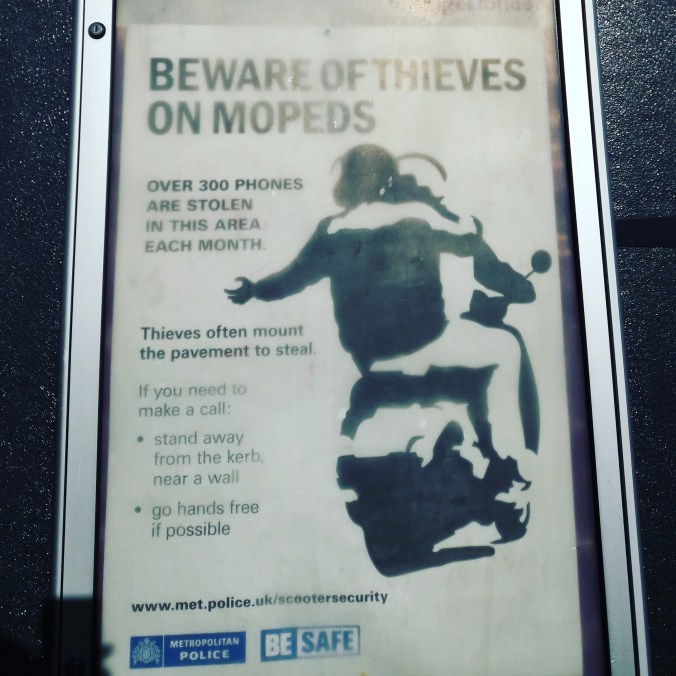
Use your phone wisely say the posters at Angel, one of Islington’s 10 tube stations (c) Engage London
It’s also well-known for being a place where thieves on scooters are expert at stealing your phone.
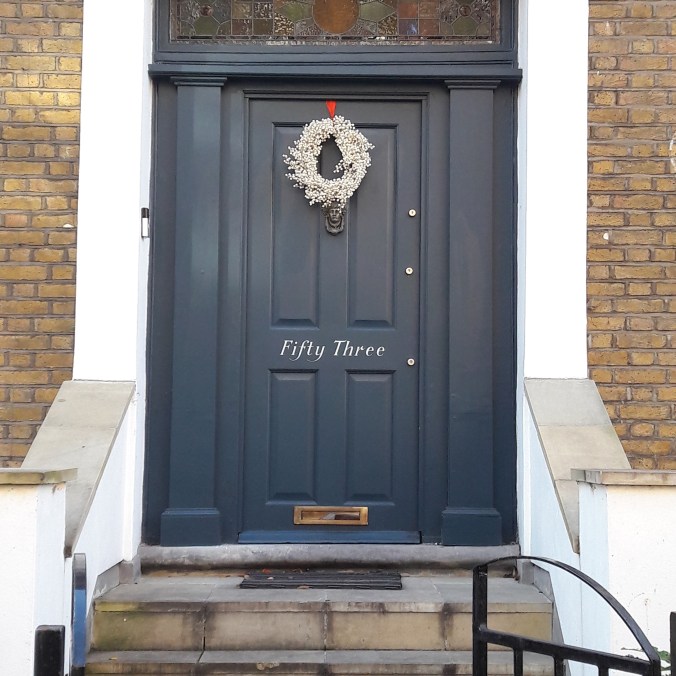
Right move states that in 2017 the average Islington property price was £776,813. A house now sells for more than £1 million. (c) Engage London
Islington is unusual. It has around 200,000 people living here. Some are well-off residents, who live in super expensive homes, and may also play a big part in media life. Around 18,300 people are on the council’s waiting list for a home and more than 700 are in temporary accommodation (source).
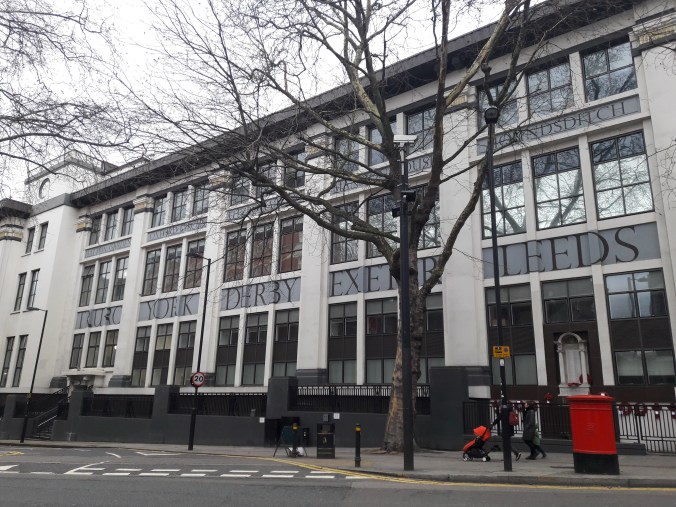
The old postal sorting office at Mount Pleasant in Islington, not far from City University, is currently being turned into high-value housing with few affordable homes in the development. (c) Engage London
A borough of two halves
Even if some Islington people are known for being well known, many more people in Islington are finding life a real struggle. Islington is:
- The 14th most deprived borough in England
- It has the second highest rate of child poverty, effecting almost half of its young people (source)
- In September 2017 Islington was declared to be the worst place in Britain to be a woman (and especially hard for young women) by BBC Radio 4. (source) One of the biggest problems is the amount it costs to buy or even rent a place of your own.
So now you know a bit more about Islington – home of Engage London participants. If you have any questions, just let us know…
Resources
- Like Instagram? You can see more pix of Islington taken by City University students @stjohnstreetnews
- Visit Islington Faces to read interviews with people who live or work in Islington.

 Engage London